The Concept
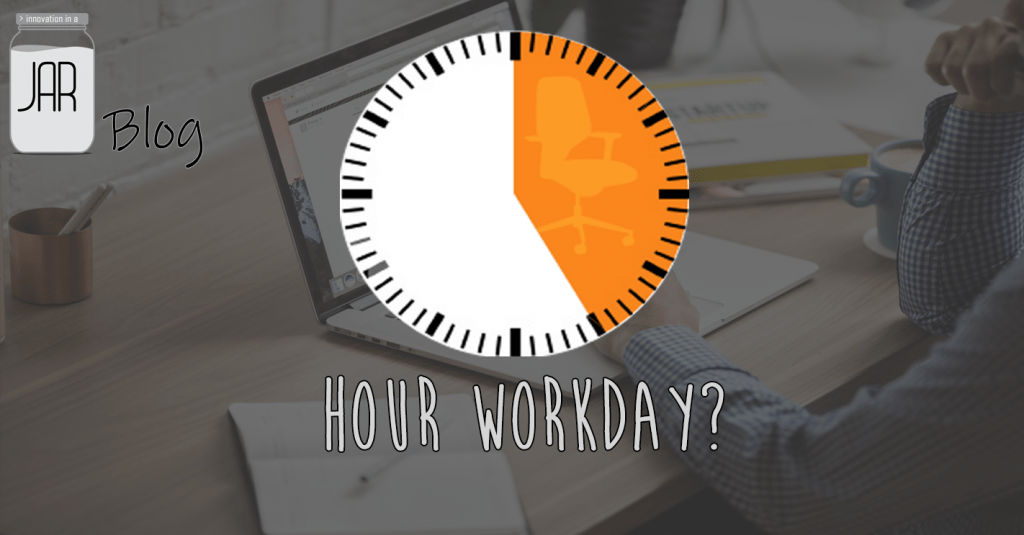
With talks of work flexibility and alternatives to the standard corporate structure, a novel concept was introduced: the 5 hour workday. In an article by the Wall Street Journal we find out that Lasse Rheingans has experimented with the idea of a 5 hour workday and he is very pleased with the results.
“We have all experienced that: We sit in the office, out of energy, reading newspapers online or Facebook, just in need of the little pauses to recharge, but you don’t really recharge,” he said in that article. “My idea is focusing on the first five hours and then just leave, and have a proper break.”
More and more people are discussing the 5 hour workday but so far there are mixed results. Case in point: San Diego’s Tower Paddle Boards is a company that has experimented with the five-hour work day and reported mixed results. “Everyone’s outside life got better at the expense of their work,” chief executive Stephan Aarstol told WSJ. But as a sort of compromise, he instituted the five-hour work day during the summer months, so that his employees could surf and enjoy the weather, reports an article by Mic.com
The story
In an effort to raise productivity and employee happiness at the same time, there have been significant changes in the industry over the years. From the inhumane 10-16 hour shifts back in the Industrial age to the 8 hour shifts, it appears that the Digital age seems to be ripe for another major shift in the way work is done. After a study was made on the productive hours of a day, it appears that the average worker is actually productive only about 2-3 hours a day. What happens in the other 5-6 hours they spent in the office?
According to an article by Inc.com, anything from checking their social media, to eating snacks. Though this can seem like a "win" for freelancers who work from home, as working from home can make someone feel like they are not working, or not doing enough, it still raises the question: "now what?"
Well, productivity, according to Rheingans. “Is about individual maturity. It’s so silly to think of a 40-hour workweek when work is not a place or time.” Agree or not, people have started to notice, and people are already talking about shifts in the 40 hour week. According to the HBR:"A typical employee day is characterized by:
- "Hour-long meetings, by default, to discuss matters that can usually be handled virtually in one’s own time
- Unplanned interruptions, helped in no small part by open-plan offices, instant messaging platforms, and the “ding” of desktop and smartphone notifications
- Unnecessary consensus-seeking for reversible, non-consequential decisions
- The relentless pursuit of “inbox zero,” a badge of honor in most workplaces, but a symbol of proficiency at putting other people’s goals ahead of one’s own
- Traveling, often long-distance, to meet people face-to-face when a phone call would suffice
- Switching between tasks constantly, and suffering the dreaded cognitive switching penalty as a result, leaving one feeling exhausted with little to show for it
- Wasting time on a specific task long after most of the value has been delivered
- Rudimentary and administrative tasks"
Not to mention that in their article also quoting the HBR, collectionhub.com reports that "Microsoft tested a four-day workweek in August, which resulted in a 40% jump in productivity and apparently made everyone happier and less stressed too. Having less time available also incentivized employees to cut on distraction, meetings, and small talk."




How Does This Work?
According to Bussiness Insider :"to ensure his company can run at the same efficiency in a smaller timeframe, Rheingans mandates employees put their phone away and that they keep small talk to a minimum. Workers only check company emails twice a day, and meetings are typically 15 minutes or shorter". This means that in order to support a five hour workday there are some changes that need to be done to the way you operate, some which may seem extreme at first, but start to make sense once you really get into it.
An article by utexas.edu claims that if subjects were in the same room as any iPhone (even one that's not turned on and not theirs) basic intelligence, memory, and attention scores all dip. Humans have an emotional attachment to phones, researchers theorized, which is why they can be more distracting than other everyday objects.
Many of today’s organizations sabotage flow by setting counter-productive expectations on availability, responsiveness, and meeting attendance, with research done by Adobe finding that employees spend an average of six hours per day on email. Which, if you combine that with the "0 inbox policy" certain companies employ, seems to be a constant distracting element for some employees.
So it stands to reason to say that, shorter, but more focused work, is a lot better than putting in long hours of work in which you have constant distractions. That is especially true for creative jobs such as programming and writing, people need time to truly think about the work that they’re doing. “If you asked them when the last time they had a chance to really think at work was, most people would tell you they haven’t had a chance to think in quite a long time, which is really unfortunate.” said Jason Fried, co-founder of Basecamp and author of It Doesn’t Have to Be Crazy at Work, said on the podcast, Future Squared by Glen Glavenski, CEO and author of Employee to Entrepreneur: How to Earn Your Freedom and Do Work That Matters.
Final Thoughts
With the Internet changing the way most businesses work and issues of burn out, stress, productivity and work flexibility surface, it seems that the 8-hour work day may not cut it anymore.
Personally, I feel that the five hour workday does offer a few appealing things to consider. Raising morale, less stress, more productivity are all things that sound great. However, considering what Rheingans said: "productivity just isn’t about the amount of time you spend working. It’s about individual maturity”. So to apply it, we have to be sure to have mature leaders applying it to mature employees.